CONTENT BIOGRAPHY

  • Abdurrahman Wahid
  • Abraham Lincoln
  • Adam Clayton
  • Adriyanti Firdasari
  • Albert Einstein
  • Alfred Hitchcock
  • Amelia Earhart(The first female pilot)
  • Andrew Jackson
  • Andrew Johnson
  • Angelina Jolie
  • Antonio Abetti
  • Antonio Contelife
  • Antonio Meucci (telephone)
  • Arnold
  • Avenged Sevenfold
  • Barack Obama
  • Barry White
  • Benjamin Harrison
  • Bill Clinton
  • Bob Marley
  • Bon Jovi
  • Brian De Palma
  • Britney Spears
  • Brooke Shields
  • Bruno Mars
  • Calvin Coolidge
  • Calvin Klein
  • Carl Sagan
  • Casey Stoner
  • Chester Arthur
  • christopher columbus
  • Ciara
  • Continental Drift Hypothesis
  • Cristiano Ronaldo
  • Dani Pedrosa
  • David Beckham
  • David Luiz
  • Dhani Ahmad Prasetyo
  • Diana Spencer
  • Dida
  • Dewa Budjana
  • Dorothy Arzner
  • Drew Barrymore
  • Dr.Grigory Perelman(mathematician)
  • Dwight Eisenhower
  • El Pacino
  • Elia Kazan
  • Eminem
  • Francis Ford Coppola
  • Franklin Delano Roosevelt
  • Franklin Pierce
  • George H. W. Bush
  • George W. Bush
  • George Washington
  • Gerald Ford
  • Grover Cleveland
  • Harry Truman
  • Herbert Hoover
  • Hugh Grant
  • Howard Hughes
  • Jack Dorsey (twitter)
  • James Buchanan
  • James Garfield
  • James Madison
  • James Monroe
  • James Polk
  • Jean Harlow
  • Jhon Lennon
  • Jimmy Carter
  • Joan Holloway
  • Jodie Foster
  • John Adams
  • John Barrimore
  • John Kennedy
  • John Quincy Adams
  • John Tyler
  • Jorge Lorenzo
  • Jude Law
  • JUSTIN BIEBER
  • Kate Winslet
  • Kate Walsh
  • Ke Ikhlasan Cinta
  • Khalid Sheikh Mohammed
  • Kim Hyun Joong
  • Kim Jong II
  • Kristen Stewart
  • Leonard Kleinrock (internet)
  • Leonardo DeCaprio
  • LIL WAYNE
  • Linking Park
  • Lionel Andrés Messi
  • Lyndon Johnson
  • Marco Simoncelli
  • Marie Antoniette
  • Mario Puzo
  • Marilyn Monroe
  • Mark Wahlberg
  • Marlon Blando
  • Martin Scorsese
  • Martin Sheen
  • Martin Van Buren
  • Megawati
  • Michael Steven Bublé
  • Michael Jackson
  • Michael Jordan
  • Michelle Keegan
  • Michael Huckabee
  • Michael Owen
  • Mike Lazaridis(Blackberry)
  • Millard Fillmore
  • Muammar al-Qaddafi
  • Muhammed Ali
  • Nicholas Cage
  • Nicki Minaj
  • Nicky Hayden
  • Nostradamus
  • Oprah Winfrey
  • Pele (Edson Arantes Do Nascimento)
  • PITBULL
  • Prof. Dr.-Ing. Dr. Sc. H.C. Mult. Bacharuddin Jusuf Habibie
  • Prof. Nigel Hitchin(mathematician)
  • Richard Nixon
  • Robert De Niro
  • Robert Pattinson
  • Roger Corman
  • Ronald Reagan
  • Rutherford Hayes
  • Scarlett Johansson
  • Sheyi Emmanuel Adebayor
  • Soeharto
  • Sophia Loren
  • Stephanie Mayer
  • Stephen King
  • Steven Frederic Seagal
  • Sukarno
  • Susilo Bambang Yudhoyono
  • Susy Susanty
  • Taylor Daniel Lutner
  • The Dropa Stone Discs
  • Theodore Roosevelt
  • Thomas A. Edison (telephone)
  • Thomas Jefferson
  • Timothy John (World Wide Web)
  • Ulysses Grant
  • Valentino Rossi
  • Warren Harding
  • Wayne Rooney
  • Will Smith
  • William Harrison
  • William McKinley
  • William Taft
  • Woodrow Wilson
  • Zacarias Moussaoui
  • Zachary Taylor
  • Zinedine Yazid Zidane
  • Zuckerberg (facebook)
  • English French German Spain Italian Dutch

    Russian Brazil Japanese Korean Arabic Chinese Simplified
    Translate Widget by Google
    Showing posts with label director. Show all posts
    Showing posts with label director. Show all posts

    Tuesday, October 18, 2011

    Alfred Hitchcock Life's Journey

    (born Aug. 13, 1899, London—died April 29, 1980, Bel Air, Calif., U.S.) English-born motion-picture director whose suspenseful films won immense popularity.
    The son of a London poultry dealer, Hitchcock attended St. Ignatius College, London, and the University of London, where he studied engineering. In 1920 he began to work in the motion-picture industry, designing title cards for the Famous Players-Lasky Company. Within a few years he had become a scenario writer and an assistant director, and he directed his first film (The Pleasure Garden) in 1925. With The Lodger (1926), the story of a family who mistakenly suspect their roomer to be Jack the Ripper, Hitchcock began making the “thrillers” with which he was to become identified. His Blackmail (1929) was the first successful British talking picture. During the 1930s he directed such classic suspense films as The Man Who Knew Too Much (1934), The Thirty-nine Steps (1935), Sabotage (1936), and The Lady Vanishes (1938). In 1939 Hitchcock left England for Hollywood, where his first film, Rebecca (1940), won an Academy Award for best picture.
    During the next three decades Hitchcock usually made a film a year in the Hollywood motion-picture system. Among the important films he directed during the 1940s were Suspicion (1941), Shadow of a Doubt (1943), Lifeboat (1944), Spellbound (1945), and Rope (1948). He began functioning as his own producer in 1948, and he went on in the 1950s to make a series of big-budget suspense films starring some of the leading actors and actresses of Hollywood. These films include Strangers on a Train (1951), Dial M for Murder (1954), Rear Window (1954), To Catch a Thief (1954), The Man Who Knew Too Much (1955; a remake of the 1934 film), Vertigo (1958), and North by Northwest (1959). In the 1960s Hitchcock turned to making thrillers with new and original emphases, among them Psycho (1960), The Birds (1963), and Marnie (1964). His Torn Curtain (1966) and Topaz (1969) are conventional espionage stories, while in his last films, Frenzy (1972) and Family Plot (1976), he returned to his original themes. From the 1940s on Hitchcock usually made a fleeting, wordless appearance in a bit part in each of his films.
    Hitchcock's films usually centre on either murder or espionage, with deception, mistaken identities, and chase sequences complicating and enlivening the plot. Wry touches of humour and occasional intrusions of the macabre complete this mixture of cinematic elements. Three main themes predominate in Hitchcock's films. The most common is that of the innocent man who is mistakenly suspected or accused of a crime and who must then track down the real perpetrator in order to clear himself. Examples of films having this theme include The Lodger, The Thirty-nine Steps, Saboteur, Strangers on a Train, I Confess, To Catch a Thief, The Wrong Man, North by Northwest, and Frenzy. The second theme is that of the guilty woman who enmeshes a male protagonist and ends up either destroying him or being saved by him; examples of this theme include Blackmail, Sabotage, Notorious, Rebecca, Vertigo, and Marnie. The third theme is that of the (frequently psychopathic) murderer whose identity is established during the working out of the plot; examples of this theme include Shadow of a Doubt, Rope, Rear Window, and Psycho. The psychopathic killer theme may sometimes be combined with the plot of the falsely accused innocent man, as in Frenzy.
    Hitchcock's greatest gift was his mastery of the technical means to build and maintain suspense. To this end he used innovative camera viewpoints and movements, elaborate editing techniques, and effective soundtrack music. He had a sound grasp of human psychology, as manifested both in his credible treatment of everyday life and in the tense and nightmarish situations encountered in his more chilling films. His ability to convincingly evoke human menace, subterfuge, and fear gave his psychological thrillers great impact while maintaining their subtlety and believability.
    Hitchcock produced several popular American television series in the 1950s and '60s, which he introduced and sometimes directed. His name also appeared on a series of mystery-story anthologies. He received the American Film Institute's Life Achievement Award in 1979 and was knighted by Queen Elizabeth II in 1980.

    Dorothy Arzner Life's Journey

    Director, scriptwriter, and inventor. Born on January 3, 1900, in San Francisco, California. Dorothy Arzner was a pioneer in the film industry. She became one of the early female directors. Growing up, Arzner dreamed of becoming a doctor. She even went as far as spending two years as a pre-med student at the University of South California. But Arzner??s dream changed later to filmmaking. Arzner worked her way up to director through a variety of positions, including script typist, film editor, and screenwriter.

    Dorothy Arzner made her directorial debut with 1927??s Fashions for Women. During the making of one of her next pictures, The Wild Party (1929), Arzner came up with a clever invention. This film starred famed silent picture star Clara Bow and Fredric March. To help Bow with her first speaking part, Arzner had the microphone attached to a rod and had it hung above the actress, granting her to freedom to move about at will. This invention is still used today and is now known as the boom microphone.

    During the 1930s, Dorothy Arzner stood alone as the only female director working at that time. Despite the difficulties and resistance she encountered as a woman in a male-dominated field, she went to make more several films with the likes of Katharine Hepburn in Christopher Strong (1933) and Joan Crawford in The Bride Wore Red (1937).

    After her last film, First Comes Courage (1943), Dorothy Arzner supported the war effort during World War II by making training films for the Women??s Army Corps. She later became a teacher at the University of California, Los Angeles, influencing the likes of Francis Ford Coppola who was one of her students.

    Dorothy Arzner died on October 1, 1979, in La Quinta, California. Among many notable accomplishments, Arzner became the first woman to join the Directors Guild of America and is also believed to be the first woman to direct a talkie, or a film with sound.

    Sunday, October 16, 2011

    Francis Ford Coppola Life's Journey

    Director, producer, writer, and businessman. Born on April 7, 1939, in Detroit, Michigan. Francis Ford Coppola emerged as one of the twentieth century’s leading directors in the 1960s. Stricken with polio as a child, he was bedridden and found creative ways to entertain himself, including producing his own puppet shows. Coppola developed an interest in film early on and studied theater at Hofstra University in New York.

    After graduating in 1960, Coppola moved to California to attend the prestigious film program at UCLA where he learned from many great instructors, including pioneering female director and screenwriter Dorothy Arzner. While in graduate school, he worked with B-movie king Roger Corman. It was Corman that gave him first shot of directing a feature film, 1963’s Dementia 13, which Coppola also wrote. While that film failed to take off, he found directorial success with the 1968 musical Finian’s Rainbow.

    Coppola first gained international critical attention for his screenwriting talents, earning an Academy Award for 1970’s Patton. Two years later, he released what is considered to be one of his best works, The Godfather (1972). Based on a novel by Mario Puzo, the critically acclaimed saga centered on the Corleones, an Italian American family involved in organized crime. Marlon Brando played the family’s patriach and Al Pacino as his son and reluctant successor. Coppola received his first nomination as director from the Academy of Motion Picture Arts and Sciences. He also scored second screenplay win, and the film won for Best Picture. The sequel, The Godfather Part II (1974) was equally well received.

    Continuing to make outstanding films, Coppola produced the riveting Vietnam War drama Apocalypse Now in 1979. Starring Martin Sheen, the film was an imaginative retelling of Joseph Conrad’s Heart of Darkness. In the 1980s and 1990s, he made several films, ranging from personal drama surrounding a group of wayward teenagers in The Outsiders (1983) to glittering jazz age saga The Cotton Club (1984) to the faithful adaptation of the classic vampire tale Bram Stroker’s Dracula (1992). He also created the final chapter to his mafia trilogy, The Godfather Part III (1990).

    After The Rainmaker (1997), Coppola stepped away from directing for a time. He focused much of his energies on other ventures, especially his California winery. Working behind the scenes, Coppola served as a producer on his daughter Sofia’s first directorial effort, 1999’s The Virgin Suicides. He has also been an executive producer for a number of films and television series, including Lost in Translation (2003), Kinsey (2004), Marie Antoinette (2006), and The Good Shepherd (2006).

    In 2007, Coppola returned to hands-on filmmaking with Youth Without Youth, which he adapted from a novella by Mircea Eliade, a Romanian philosopher. At the time, Coppola told Entertainment Weekly, “I’m announcing a new phase where I make more personal films.” Next up for this famous filmmaker reportedly is Tetro, a drama about an Italian immigrant family.

    Speaking of family, Coppola has many relatives in entertainment. His sister is actress Talia Shire, and his nephew is actor Nicolas Cage. In addition to daughter Sofia, he and wife Eleanor also have a son named Roman who directs and acts as well. Their late son, Gian-Carlo Coppola, was an actor. He died in a boating accident in 1986.

    Thursday, October 13, 2011

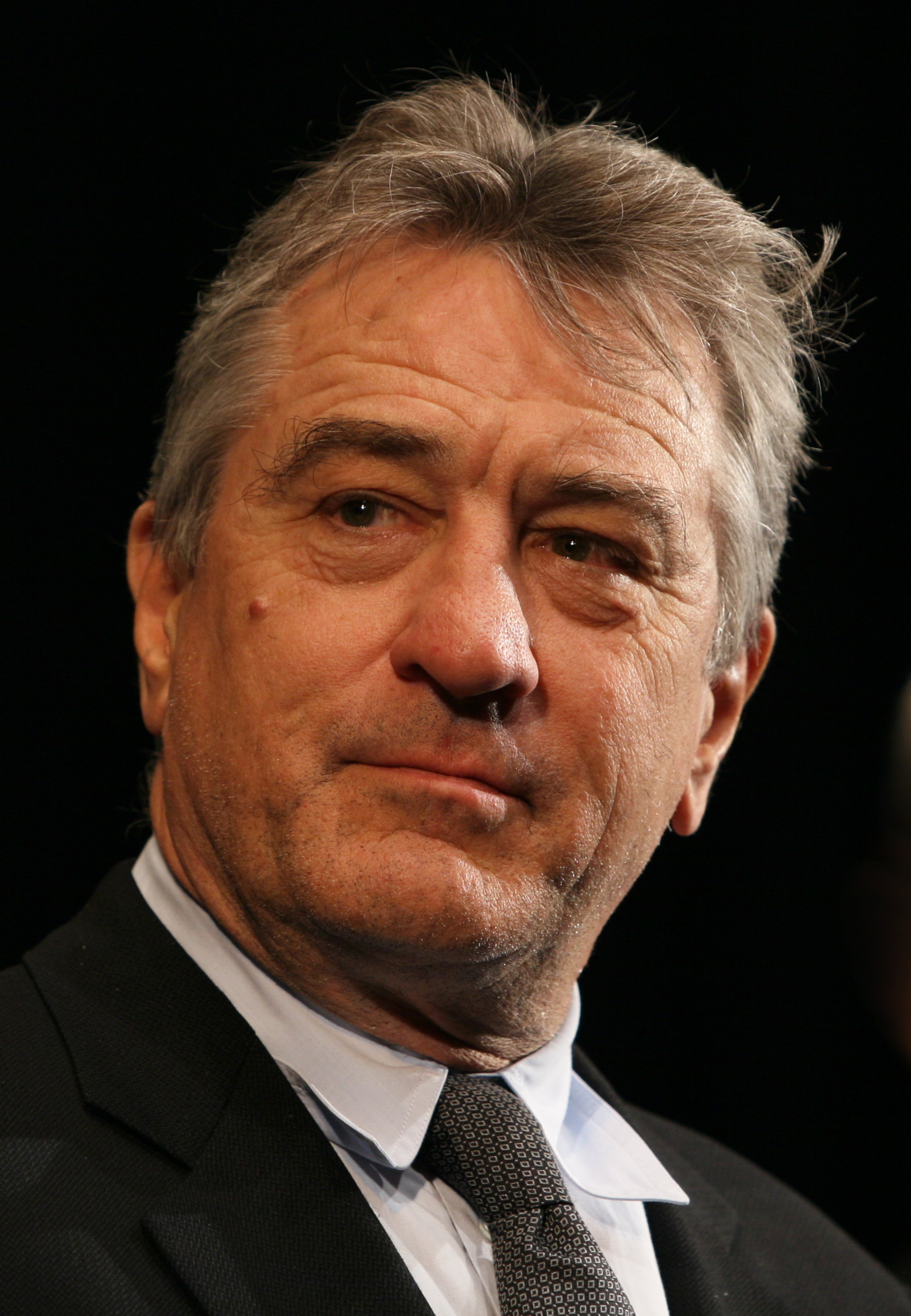
    Robert De Niro Life's Journey

    Robert De Niro, born August 17, 1943, left school at age 16 to study acting with Stella Adler. He then worked with many acclaimed film directors like Brian DePalma, Elia Kazan, and, most importantly, Martin Scorsese. His roles in The Godfather, Part II

    The son of two Greenwich Village artists, De Niro dropped out of school at age 16 to study at the Stella Adler Conservatory of Acting. After working in a few Off-Off-Broadway plays, he appeared in his first film, Brian De Palma's The Wedding Party (1963, released 1969). During the next four years he appeared in several minor films, the most notable being The Gang That Couldn't Shoot Straight (1971). It was not until his performance in Bang the Drum Slowly (1973) that he was widely recognized as an excellent actor. Mean Streets (1973) marked De Niro's first association with director Martin Scorsese, with whom he would do some of his most celebrated work. Director Francis Ford Coppola, whose massively popular The Godfather (1972) had won the best picture Oscar, was so impressed by De Niro in Mean Streets that he offered the actor the part of young Vito Corleone in The Godfather, Part II (1974), forgoing even a screen test. De Niro's brilliant take on the part that was created by Marlon Brando in the first Godfather film earned him a best supporting actor Oscar and made him an international star.

    Roger Corman Life's Journey

    (born April 5, 1926, Detroit, Mich., U.S.) motion picture director, producer, and distributor known for his highly successful low-budget exploitation films and for launching the careers of several prominent directors and actors.
    In 1940 Corman's family moved from Detroit, Michigan, to Beverly Hills, California, near Hollywood—a move that inspired young Roger's love of motion pictures. After serving in the Navy during World War II, Corman earned an engineering degree from Stanford University. He broke into the film industry in 1948, where he began working as a messenger at Twentieth Century Fox. He was soon promoted to script reader. After a one-year hiatus during which he studied English literature at the University of Oxford, he coproduced his first film, Highway Dragnet, in 1954.
    His third film, Monster from the Ocean Floor (1954), was made in six days on a budget of $12,000; it was the first of his movies to follow what was to become his standard method of operation: inexpensive productions shot in the minimum amount of time. The titles of many of Corman's films of the 1950s—The Beast with a Million Eyes (1955), It Conquered the World (1956), Attack of the Crab Monsters (1957), Teenage Cave Man (1958), Night of the Blood Beast (1958), The Brain Eaters (1958), The Cry Baby Killer (1958; the film that marked the screen debut of actor Jack Nicholson), and A Bucket of Blood (1959)—indicate why he earned the nickname “King of the Drive-in.”
    In 1960 Corman produced and directed a cult classic, The Little Shop of Horrors, which was shot in two days and one night on a leftover set. During the 1960s he directed eight gothic horror films based on the stories of Edgar Allan Poe, including The Fall of the House of Usher (1960), The Pit and the Pendulum (1961), The Raven (1963), The Haunted Palace (1963), and The Masque of the Red Death (1964), featuring such established actors as Vincent Price, Basil Rathbone, Boris Karloff, Ray Milland, and Peter Lorre.
    In 1970 Corman formed New World Pictures, an independent distribution company that produced the work of such struggling young artists as Francis Ford Coppola, John Sayles, Martin Scorsese, Joe Dante, Jonathan Demme, James Cameron, and Peter Bogdanovich. New World's first film, The Student Nurses (1970), was shot in three weeks for $150,000 and grossed more than $1 million. Other early New World releases included horror, biker, and women-in-prison films. The profits from these low-budget features allowed Corman to act as the American distributor for a number of prestigious foreign films, including Ingmar Bergman's Cries and Whispers (1972), Federico Fellini's Amarcord (1974), and Volker Schlndorff's The Tin Drum (1979).

    By the beginning of the 21st century, Corman had produced or directed more than 350 films. Despite their blatantly low production values, the majority of Corman's films are surprisingly entertaining, literate, and often characterized by a campy, self-deprecating humour. His influence on contemporary American cinema has been enormous, in large part because of his discovery and promotion of young actors and directors. Though Corman officially retired from directing in 1971, he made a comeback with the well-received Frankenstein Unbound (1990), 
    starring Raul Julia and Bridget Fonda. In that year he also published his autobiography, the aptly titled How I Made a Hundred Movies in Hollywood and Never Lost a Dime, cowritten with Jim Jerome.

    Twitter Delicious Facebook Digg Stumbleupon Favorites More